
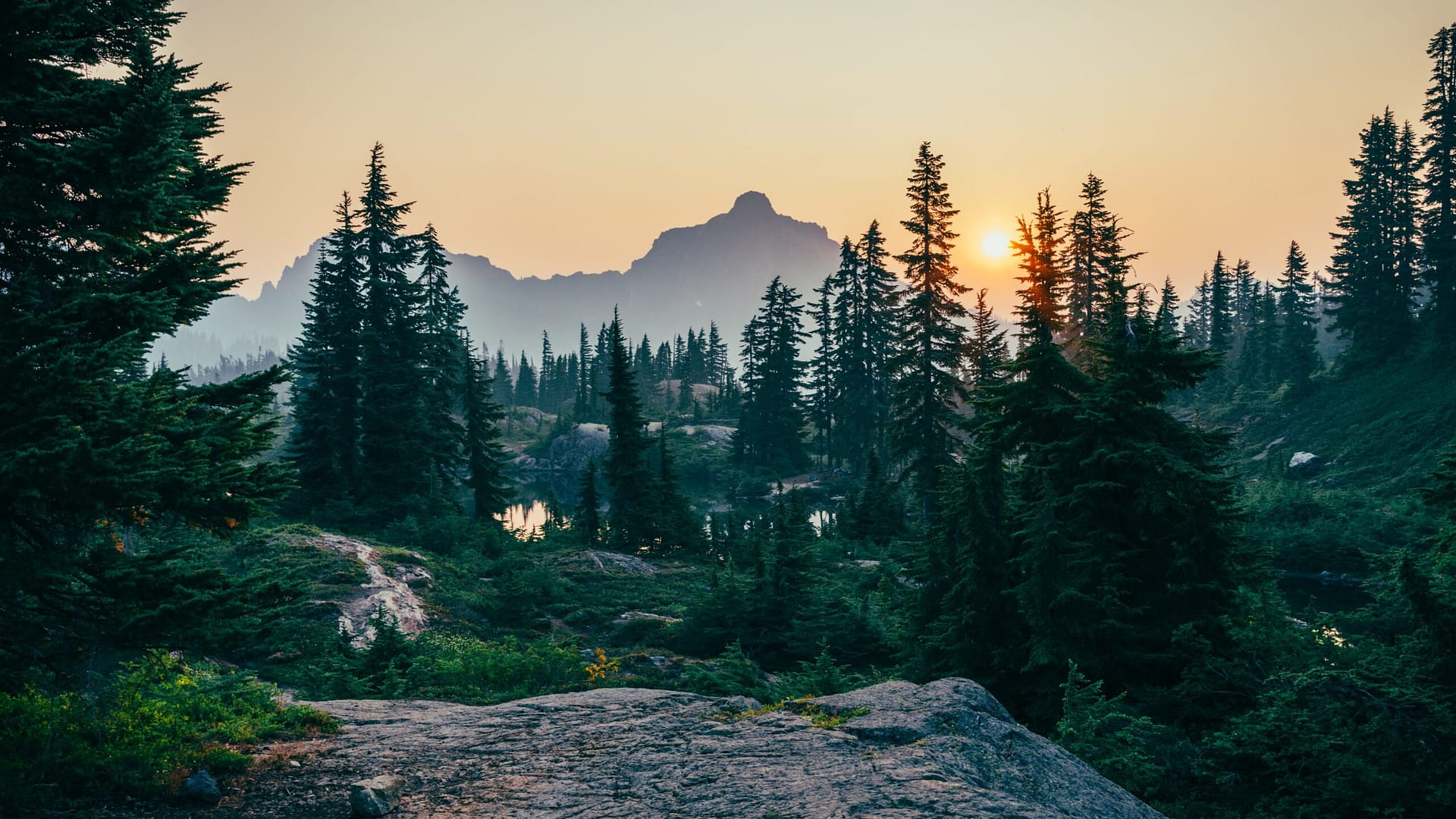
The Freedom To Roam/Right of Public Access (Allemansrätten) is an incredible right that many take for granted. It grants everyone access to nature where they can both experience adventure and find relaxation. However, with rights come responsibilities. This involves taking responsibility for nature, wildlife, landowners, and other visitors.
By reading this text, you will learn a lot about what you need to know to correctly exercise the Right of Public Access. You will learn about your rights, responsibilities, and the origin of the Right of Public Access.
If you have questions after reading this text, you can easily contact us by clicking here. We will then respond with answers and update this page with any missing information.
Rights and Responsibilities
The Right of Public Access gives you the right to traverse private land in nature and temporarily stay on the land. When you are at a location, you have the right to, among other things, pick berries, mushrooms, and other plants, camp overnight, and make a fire.
When it comes to responsibilities, however, it is more challenging to determine what is acceptable and what is not. For example: Defining what it means to stay “temporarily” at a location and knowing how much of something you are allowed to pick can be unclear, to say the least. The easiest way to determine this is to follow the summary provided by the Swedish Environmental Protection Agency: “Do not disturb – do not destroy.” For example, you are not allowed to disturb the landowner or the animals, and you are also not allowed to uproot blueberry bushes when picking their berries or break branches to make a fire.
Making Fires in Nature
The Right of Public Access grants many rights, but keep in mind that the right to make a fire does not always apply. If you are going to make a fire, you must do it on a suitable surface. Such as on gravel and sand to minimize the risk of spreading. If you make a fire on, for example, moss or other flammable surfaces, there is a risk that it will spread. Or that embers will remain after you leave, potentially flaring up later causing a wildfire. And always avoid making fires on and near rock faces and boulders, as they can crack and leave scars in nature that will never heal!
Finding firewood is easy in some cases and impossible in others. You are only allowed to burn what is on the ground and not wind-felled. For example, cones, needles, and small branches are acceptable, while branches from trees and growing grass are not allowed. If you are in dedicated outdoor areas, there may be firewood provided, which can be very useful in rainy weather.
If there is a fire ban, you can only use charcoal grills and small camping stoves. Even if you find a designated fire pit, you are not allowed to make a fire during a fire ban. And remember that different rules may apply in nature reserves and national parks.

Overnight Stays and Camping
As a rule of thumb, it is generally allowed to camp for one night, and you should maintain a distance from the landowner’s house. However, if you camp far away from the land owners home, and for more than one night, you can often stay more than a single night. As long as your camp life do not affect the nature too much.
If you plan to camp within a nature reserve or national park, keep in mind that it is only allowed in designated and marked areas (unless otherwise specified.) And there may be a ban on camping in certain outdoor areas.
Always avoid setting up your camp on used pasture, agricultural land, or plantations. A good rule of thumb is to find land that is unused and minimally affected when pitching your tent.
Picking Flowers, Berries, and Mushrooms
When picking flowers, berries, mushrooms, or similar items in nature, you must consider that some plants are protected. Different protected plants have different rules. Some can be picked for personal use (not for sale) as long as you don’t uproot them, while others cannot be picked, removed, or have their seeds damaged. You can learn more about protected species here.
The legal texts regarding this may sometimes require a bit of interpretation. According to the law, you are not allowed to pick moss without the landowner’s permission. However, in small quantities and not for sale, this should be fine. The law also mentions that you cannot pick stones. But, as with most aspects of the Right of Public Access, it’s about interpretation and quantity. Taking several large stones is not allowed, but a few smaller ones should not be a problem.
Pick With Caution
Berries and mushrooms cannot be picked as long as they are still rooted or attached to branches. However, it is free to pick mushrooms growing on the ground (where the Right of Public Access applies). If you happen to find truffles in the forest, it’s advisable to avoid picking them, as the legal situation regarding this mushroom is unclear, mainly because it usually needs to be dug up.
Picking berries is allowed in both large and small groups, for private or commercial use. However, the organizer of the picking activity should always have consulted with the landowner beforehand. The landowner has the right to intervene only if it leads to some form of damage (being disturbed does not count as damage).
If you plan to pick nuts and acorns, you will need to reconsider. As these are not covered by the Right of Public Access. If you’re looking for these, you can always ask the landowner for permission.
If you come across an abandoned property, you have the right to pick wild fruits and berries. However, note that there may be different rules than those mentioned here within certain nature reserves and national parks.

Origin
Our wonderful Right of Public Access (allemansrätten) was introduced by authorities to make it easier for urban populations to access nature. When the term emerged after World War II (1940s), there was no law supporting this right. However, in 1994, it was enshrined in one of Sweden’s fundamental laws, the Instrument of Government (regeringsformen, RF), where it remains today.
Right of Public Access in Other Parts of the World
The Right of Public Access in Sweden, Finland, and Norway (note that Denmark is not included) is based on the same fundamental principle but differs slightly when it comes to specific rights. Nevertheless, the right to move on foot, overnight stays, and picking berries, mushrooms, and similar activities is included in all these countries.
Countries beyond these often have more stringent regulations regarding access to nature. If you wish to enjoy nature in another country, you should look up specific information for the country you plan to visit. Wikipedia provides basic information about some additional countries.
National Parks and Nature Reserves
Keep in mind that there are usually unique rules for national parks and nature reserves. These rules may concern activities such as fires, camping, and flower picking. Always research the area you plan to visit if your stay involves more than just hiking.

Example Scenarios
Scenario 1: Disturbing and Damaging
John goes to hike in nature with a small group of friends and sets up camp near a cabin, where the landowners live. During the night, they play loud music and breaks branches from trees to keep the fire going during a late-night barbecue.
In this example, John and his friends commit several mistakes. The first mistake is disturbing the landowners. Instead they should’ve set up camp further away from the landowners cabin. As camping near residences is not always appreciated/allowed. The second mistake they make is playing loud music, which disturbs both the landowners and the wildlife. Lastly, they absolutely should not break branches from trees to keep the fire going.
Scenario 2: Too Many Tents on Private Land
Lina brings a large group of friends to a vast forest in northern Sweden, where they plan to stay for two nights. They set up eight tents and cook their meals using portable stoves.
Setting up tents in large groups is not allowed without permission from the landowner. This is due to the risk of causing damage to the land and creating sanitary issues becomes significantly greater.
Conclusion
If you have read all the text on this page, you have probably realized that you often need to research the location you plan to visit before heading out. We recommend making this a rule and preserving our Right of Public Access.
If you have questions, concerns, or requests for additional examples, do not hesitate to contact us!
